

If you've searched for soft washing in Lakewood Ranch and found yourself wondering whether it's any different from standard pressure washing, you're not alone. The two terms get used interchangeably, but they are not the same method — and using the wrong one on the wrong surface can cause real damage to your home.
Here's what you need to know before hiring anyone to clean your home's exterior in Lakewood Ranch.
Understanding the Two Methods — and When Each One Applies
What Is Soft Washing?
Soft washing uses low water pressure, typically under 500 PSI, combined with a professional-grade cleaning solution to remove mold, algae, mildew, and biological growth from exterior surfaces.
The cleaning solution does the work, not the water pressure. The most common formulation uses a diluted sodium hypochlorite solution (similar to bleach, but applied at controlled ratios between 1% and 3% depending on the surface) along with a surfactant that helps the solution cling to vertical surfaces and penetrate organic buildup.
After a dwell time of several minutes, the surface is rinsed at low pressure. The result is a clean surface where the biological growth has been killed at the root, not just blasted off temporarily.
What Is Pressure Washing?
Pressure washing uses high-pressure water, typically between 1,500 and 3,500 PSI, to physically remove dirt, staining, grime, and debris from hard surfaces.
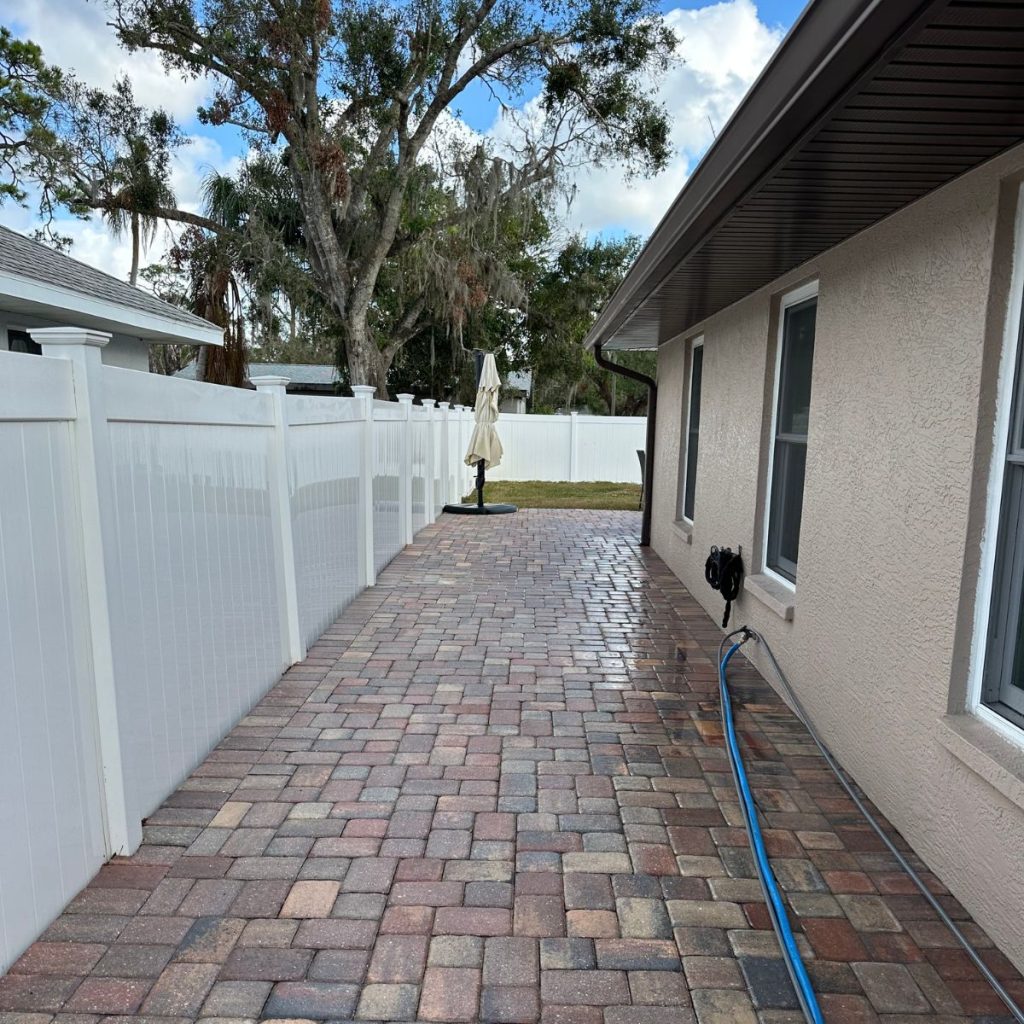
It is highly effective on surfaces that can withstand that force: concrete driveways, brick pavers, pool decks, and sidewalks. On those surfaces, pressure washing delivers results that soft washing alone cannot match.
The problem is when high pressure is applied to surfaces that were never designed to handle it.
Driveway and Fence Cleaning: Where Pressure Washing Is the Right Call
For concrete driveways, paver driveways, and most hard fence materials, pressure washing is the appropriate method. Concrete can handle 2,500 to 3,000 PSI without damage, and that pressure level is what actually lifts oil stains, tire marks, and embedded algae from the surface.
Vinyl and aluminum fencing can typically be cleaned at lower pressure settings, around 1,200 to 1,500 PSI, with good results. Wood fencing requires more care and is often better suited to soft washing depending on the condition of the wood and finish.
For Lakewood Ranch homeowners preparing for an HOA inspection, a professionally pressure-washed driveway and fence line makes a significant visible difference and is one of the most common areas HOA reviewers cite in exterior violation notices.
Roofs, Stucco, and Painted Siding: Why Soft Washing Is the Only Safe Option
This is where the stakes get high, and where the wrong decision can cost thousands of dollars.
Lakewood Ranch's housing inventory is dominated by homes built by Lennar, Taylor Morrison, and Neal Communities. The overwhelming majority feature stucco exteriors and concrete tile or shingle roofs. These surfaces are not compatible with high-pressure washing.
Pressure washing stucco can:
- Force water behind the stucco layer, leading to moisture intrusion and mold inside wall cavities
- Chip or crack the surface finish, requiring costly repairs
- Strip the paint or texture coat unevenly, creating visible patchwork
For tile and shingle roofs, most manufacturer warranties explicitly prohibit high-pressure cleaning. GAF, Owens Corning, and Boral all recommend low-pressure or no-pressure cleaning methods to avoid voiding coverage. A contractor who pressure washes your roof is potentially nullifying your warranty without you knowing it.
Soft washing handles all of these surfaces safely. The cleaning solution eliminates the algae, lichen, and black streaks (caused by Gloeocapsa magma bacteria) that accumulate on Florida roofs without a single PSI of damaging pressure.
HOA Communities in Lakewood Ranch: Which Method Keeps You Compliant?
Lakewood Ranch's community associations maintain some of the most detailed exterior appearance standards in the region. Annual reviews check driveways, roof lines, siding, fences, and gutters — and violations come with deadlines and fines.
The method that keeps you compliant depends on what's being inspected. Driveways and hard surfaces need pressure washing. Roofs, siding, and stucco need soft washing. In most cases, a full exterior cleaning that covers both methods in a single visit is the most efficient way to address everything before an inspection.
A professional familiar with HOA standards in Lakewood Ranch will assess the full exterior and recommend the right approach for each surface — not apply one method to everything.
Side-by-Side: Soft Washing vs. Pressure Washing
| Factor | Soft Washing | Pressure Washing |
|---|---|---|
| Water Pressure | Under 500 PSI | 1,500 to 3,500 PSI |
| Cleaning Agent | Sodium hypochlorite solution + surfactant | Water only or mild detergent |
| Best Surfaces | Roofs, stucco, siding, wood, screen enclosures | Concrete, pavers, brick, pool decks |
| Results Duration | Longer-lasting — kills growth at root | Shorter-lasting on organic growth |
| Risk of Damage | Low when properly applied | High on delicate surfaces |
| Roof Warranty Safe | Yes | No — most warranties prohibit it |
Common Mistake: What Happens When You Pressure Wash a Stucco Home
The most frequent mistake homeowners make is hiring a low-cost contractor who uses high pressure on everything, because it's faster and requires less equipment.
On a stucco home, the results often don't show up immediately. Water intrudes behind the surface layer and sits in the wall cavity. Within weeks or months, interior moisture problems, bubbling paint, or visible staining appear, and none of it looks like water damage until a contractor opens the wall.
Before hiring anyone to clean your home's exterior, ask directly: do you soft wash roofs and stucco, or do you use the same pressure settings across the whole house? The answer will tell you what you need to know.
Frequently Asked Questions
Is soft washing safe for all roof types in Lakewood Ranch?
Yes. Soft washing is safe for concrete tile, clay tile, and asphalt shingle roofs — the three most common types in Lakewood Ranch. It is the cleaning method recommended by most roofing manufacturers and is required to maintain many roof warranties. High-pressure washing is not appropriate for any of these roof types.
How often should Lakewood Ranch homeowners soft wash their roof and exterior?
For most homes in Lakewood Ranch, a full exterior soft wash every 12 to 18 months is appropriate. Homes with heavy tree coverage, those near water, or properties that have gone more than two years without cleaning may need more frequent service. Driveways and hard surfaces typically benefit from pressure washing once a year.
Can I soft wash my own home, or should I hire a professional?
Soft washing requires proper dilution of cleaning chemicals, appropriate application equipment, and knowledge of dwell times and rinsing protocols. Incorrect chemical ratios can damage plants, discolor surfaces, or fail to fully eliminate biological growth. For stucco homes and roofs, professional application is strongly recommended to avoid damage and ensure the job is done correctly.
For a full breakdown of pressure washing and soft washing services offered in Lakewood Ranch, or to learn more about keeping your home's exterior in compliance with HOA standards, visit our residential exterior cleaning page or review our frequently asked questions.